Your bedroom is where you spend one-third of your life. Yet most bedrooms are designed for looks, not for rest. Harsh lighting, synthetic materials, electromagnetic interference, visual clutter, and cold colour palettes all signal to your nervous system: “Stay alert. Stay tense.”
A high-frequency bedroom does the opposite. It tells your body: “You are safe here. You can let go. Your healing happens in this space.”
This is not about spending thousands of dollars or turning your bedroom into a spa. It is about strategic choices—textiles, metals, light, sound and intentional design—that create an environment supporting deep, regenerative rest. This guide walks you through every element, with a checklist you can use to audit and upgrade your own space.
Why Your Bedroom Environment Matters More Than You Think
Your Nervous System Learns Spaces
Your brain is constantly scanning your environment for safety cues. In your bedroom, it should find: calm, comfort, darkness (or low light), minimal threat signals. When it does, your parasympathetic nervous system (rest-and-digest mode) activates naturally.
Conversely, a bedroom full of screens, bright colours, synthetic fabrics and clutter keeps your sympathetic nervous system (fight-or-flight) subtly activated, even during sleep. You may technically rest, but at a shallow level.
Sleep Quality Compounds Over Time
One night of poor sleep is recoverable. But weeks or months of shallow sleep due to an unsupportive environment? That accumulates into chronic stress, weakened immunity, hormonal dysregulation and accelerated aging.
Upgrading your bedroom is an investment in your long-term health, not a luxury.
Your Bedroom Sets the Tone for Everything Else
If you start your day groggy and exhausted because your sleep environment was not supportive, no morning ritual or supplement fully compensates. A high-frequency bedroom is the foundation for everything else you do to support wellness.
The Five Core Elements of a High-Frequency Bedroom
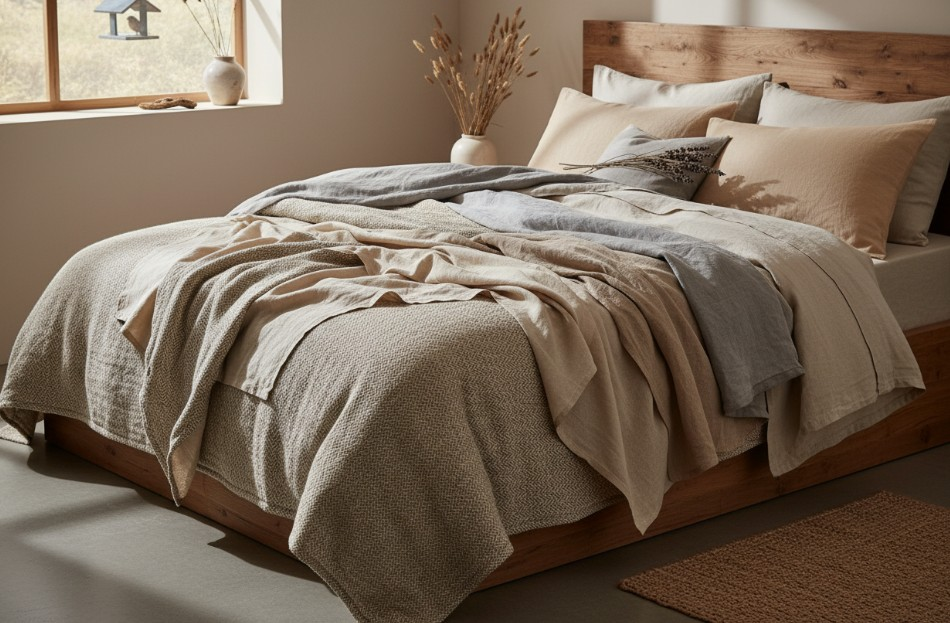
1. Natural Textiles: Hemp, Linen & Organic Cotton
Why textiles matter: Your skin spends 6-8 hours in direct contact with your sheets. Synthetic fabrics trap heat, build static electricity and off-gas petrochemical residues. Natural fibres breathe, regulate temperature and feel alive against your skin.
Bedding hierarchy (invest here first):
- Fitted sheet: Hemp or linen (highest priority—you sleep on this).
- Pillowcases: Hemp or linen (impacts skin and sinuses).
- Duvet cover: Hemp, linen or organic cotton blend.
- Throw blanket: Lightweight hemp, linen or organic wool for layering.
Pro tips:
- Choose natural, undyed or low-dye options to reduce chemical exposure.
- Linen is cooler and more breathable; hemp is more durable and grounding.
- Start with pillowcases and one sheet if budget is tight. You will notice a difference immediately.
- Wash in mild detergent and line dry when possible to preserve fibre integrity.
2. Metals as Grounding Anchors
Why metals matter: Metals serve both practical and symbolic purposes in your bedroom. Copper grounds and activates; silver calms and protects.
Strategic placements:
- Bedside water carafe or cup (copper or silver): For hydration rituals and grounding presence.
- Small copper or silver bowl: For jewelry, crystals or intentions.
- Metal frame or headboard: If you have one, it naturally grounds the sleep space.
- Silver or copper lamp base: Subtle, functional and energetically supportive.
Pro tips:
- Use copper items on the side of the bed where you need grounding or activation (typically your dominant side).
- Use silver items on the side where you need calming or protective energy (often the non-dominant side or heart side).
- Keep metals polished but do not obsess; the patina on copper or tarnish on silver does not reduce their function.
- One or two metal pieces per bedside table are enough; too many creates visual clutter, which lowers frequency.
3. Light and Darkness: The Circadian Ally
Why light matters: Your brain produces melatonin (the sleep hormone) in response to darkness. Any artificial light—even a tiny LED on a device—interferes with this. Conversely, dim warm light before bed signals your system to begin winding down.
Lighting upgrades:
- Remove or cover all LEDs and device lights. Use black tape over power indicators if needed.
- Install warm-toned dimmers so you can gradually lower light as evening approaches (3000K or lower colour temperature).
- Use a small bedside reading lamp (warm, directional) rather than overhead lights.
- Blackout curtains or thick drapes that block outside light completely.
- Consider a sunrise alarm clock that gradually brightens in the morning instead of jolting you awake.
Pro tips:
- Avoid screens 30-60 minutes before bed, or use blue-light blockers.
- If you must have a nightlight, use red or amber (not blue or white).
- Invest in quality blackout curtains; the sleep quality improvement is measurable within days.
4. Sound and Frequency: The Auditory Environment
Why sound matters: Sound enters your sleeping brain and influences brainwave states. Silence is rare in modern life, but strategic sound can actually support rest better than noise.
Sound options:
- White noise or pink noise machine: Masks jarring sounds and creates acoustic consistency.
- Frequency-based sleep playlists: Binaural beats or delta-wave music (designed to support deep sleep).
- Nature sounds: Rain, ocean waves, forest ambience (authentic recordings, not synthetic).
- Gentle tuning fork practice: 128 Hz or 136.1 Hz forks activated 15 minutes before sleep.
- Silence with earplugs: If you live in a very noisy environment, quality earplugs (silicone, not foam) are an option.
Pro tips:
- Choose one sound and keep it consistent; your brain learns the pattern and relaxes into it.
- Keep volume low—you should barely need to concentrate to hear it.
- Use a speaker away from your head (not earbuds) so sound surrounds rather than intrudes.
- Test different frequencies; 40 Hz is stimulating, 10 Hz is deeply calming, and 7.83 Hz matches Earth’s Schumann resonance.
5. Air Quality and Scent: The Chemical Environment
Why air matters: Off-gassing from synthetic mattresses, furniture, paints and cleaning products fills your bedroom with volatile organic compounds (VOCs). You breathe these for eight hours. It matters.
Air quality upgrades:
- Open windows regularly for fresh air exchange, even in winter.
- Place a potted plant or two (snake plant, pothos, peace lily) for natural air filtration.
- Avoid synthetic air fresheners and perfumed candles. These add chemicals, not remove them.
- If you use scent, go minimal: A single essential oil (lavender, chamomile) on a cotton ball, or nothing at all.
- Mattress: choose natural materials (latex, wool, organic cotton) or let a new synthetic mattress off-gas in another room for weeks before moving it in.
Pro tips:
- Avoid plug-in fresheners, reed diffusers and heavily scented laundry products in the bedroom.
- Wash bedding in unscented or lightly scented detergent.
- If you love scent, choose high-quality essential oils and use sparingly (one drop on a pillow corner is enough).
High-Frequency Bedroom Checklist
Use this to audit your current space and plan upgrades. You do not need to do everything at once. Prioritize based on impact and budget.
Textiles (Priority 1)
- ☐ Fitted sheet: hemp, linen or organic cotton
- ☐ Pillowcases: hemp, linen or organic cotton (at least two)
- ☐ Duvet or blanket: natural fibre (organic cotton, linen, wool or hemp)
- ☐ Throw blanket: lightweight, natural fibre
- ☐ All textiles: low-dye or undyed options preferred
- ☐ Pillows: natural fill (latex, buckwheat, organic cotton) not synthetic foam
Metals & Objects (Priority 2)
- ☐ Copper or silver water carafe or cup by the bed
- ☐ Small metal bowl for jewelry or intention-setting
- ☐ Natural wood or metal nightstand (avoid particleboard or heavily stained wood)
- ☐ Minimal decorative items (less is more for frequency)
Light & Darkness (Priority 2)
- ☐ Blackout curtains or heavy drapes (tested—does light leak?)
- ☐ All LED and device lights covered or removed
- ☐ Warm-toned dimmable lighting (bedside lamp, overhead if necessary)
- ☐ No screens visible from bed
- ☐ Optional: sunrise alarm clock for mornings
Sound & Frequency (Priority 3)
- ☐ Chosen sound: white noise, nature sounds, frequency music or silence
- ☐ Speaker placed away from head (if using sound)
- ☐ Volume tested (barely audible is ideal)
- ☐ Optional: tuning forks (128 Hz or 136.1 Hz) for pre-sleep ritual
Air & Scent (Priority 3)
- ☐ Windows openable and opened regularly
- ☐ One or two potted plants (air-filtering variety)
- ☐ No synthetic air fresheners, perfumed candles or heavily scented products
- ☐ Optional: single essential oil (lavender, chamomile) used sparingly
- ☐ Bedding washed in unscented or lightly scented detergent
Clutter & Visual Space (Priority 1)
- ☐ Bedroom contains only sleep and intimate items (no work desk, exercise equipment, piles of clothes)
- ☐ Nightstands clear except for water, lamp and one decorative item
- ☐ Closet door closed or curtained
- ☐ Laundry basket stored outside the bedroom or in a closed container
- ☐ Colour palette: calming (soft neutrals, cool blues, warm earth tones—avoid bright or harsh colours)
Putting It All Together: A Design Guide
The Minimalist High-Frequency Bedroom
Colour palette: Soft grey, cream, warm taupe.
Key elements: Linen sheets, simple wooden bed frame, one copper carafe, blackout curtains, white noise machine.
Feel: Clean, calm, intentional.
The Earthy High-Frequency Bedroom
Colour palette: Warm grey, soft terracotta, sage green.
Key elements: Hemp bedding, natural wood nightstand, copper cup, potted plants, warm dimmable lamp, gentle nature sounds.
Feel: Grounded, nourishing, connected to nature.
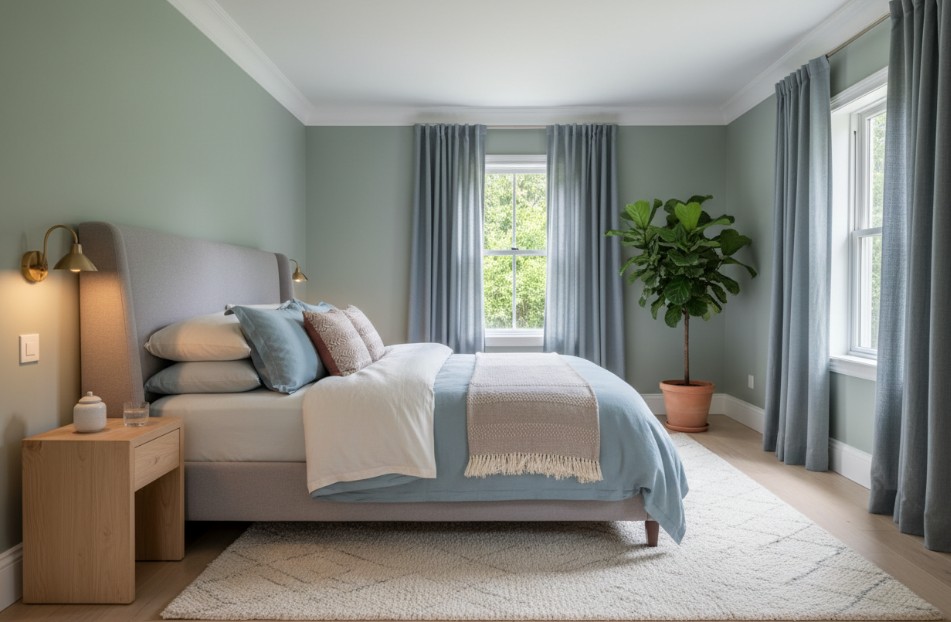
The Luxe High-Frequency Bedroom
Colour palette: Soft white, pale blue, warm gold accents.
Key elements: Premium linen, upholstered headboard (natural fabrics only), silver accessories, high-end blackout curtains, tuning forks, subtle lighting design.
Feel: Refined, restful, indulgent.
Common thread: All prioritize natural textiles, minimal clutter, warm light control, and intentional metal elements. The specific style depends on your aesthetic and budget.
How to Upgrade Without Overwhelm (Phased Approach)
Phase 1: This Week (Zero to Minimal Budget)
- Remove all devices and covers all LEDs in the bedroom.
- Open windows daily for 10 minutes.
- Commit to one high-frequency ritual (e.g., copper water + breath before bed).
Phase 2: Month 1 ($50–150)
- Purchase hemp or linen pillowcases (you will feel the difference immediately).
- Get blackout curtains or heavy drapes.
- Download a free white noise or delta-wave sleep app.
Phase 3: Month 2–3 ($150–400)
- Upgrade fitted sheet to natural fibre.
- Add copper or silver water carafe.
- Purchase dimmable warm lighting for bedside.
Phase 4: Ongoing ($50–100/month)
- Gradually upgrade remaining bedding items.
- Add optional elements (tuning forks, plants, premium pillows).
- Refine your environment based on what actually improves your sleep.
Key principle: Start with textiles and darkness (biggest impact, relatively affordable). Then add metals and sound. Refinement comes later.
How to Know If Your Bedroom Is Working
After two weeks of upgrades, notice:
- Do you fall asleep faster?
- Do you wake fewer times during the night?
- Is your sleep deeper (less light dreaming, more rest)?
- Do you wake feeling more refreshed instead of groggy?
- Is your mood noticeably better?
- Are you less anxious or irritable during the day?
These are the real metrics. If you are sleeping better and feeling better, the design is working.
Your High-Frequency Bedroom Awaits
Designing a high-frequency bedroom is not about perfection or expense. It is about intention. Every choice—from linen sheets to a single copper carafe to blackout curtains—sends a message to your nervous system: “I am worthy of rest. I deserve deep healing. This space is safe.”
Your body receives that message and responds. Better sleep, calmer nervous system, more resilience, better health.
Start today. Pick one element from the checklist and commit to it this week. One small change compounds into a transformed sleep environment and a transformed life.
Ready to design your high-frequency bedroom? Screenshot this checklist and dive into our full room-by-room guide, complete with specific product recommendations, at earthlyessential.com. Your sanctuary awaits.