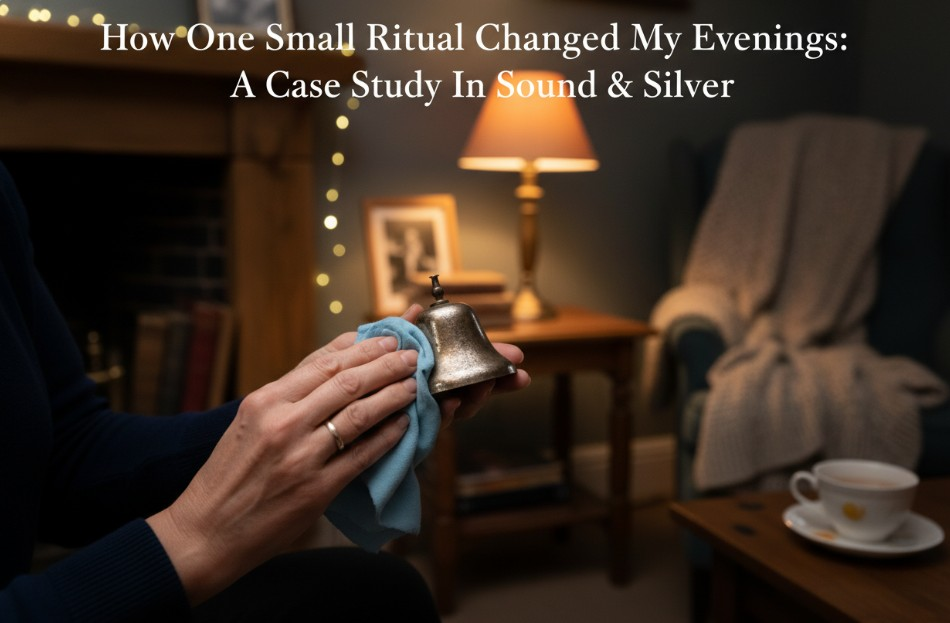
This 10-Minute Night Ritual Changed Everything
I used to end my evenings exactly like most people: scrolling on my phone until midnight, my nervous system still in full activation mode, my mind spinning with the day’s unfinished tasks. I would collapse into bed physically exhausted but mentally wired. Sleep was shallow. My dreams were chaotic. I woke up feeling like I had never really rested.
This went on for years. I thought it was normal. I thought this was just how my body worked.
Then, a simple 10-minute ritual changed everything. Not overnight—but within two weeks, I noticed a shift so significant that I started paying attention to exactly what was happening. This is my story, and the tools I discovered along the way.
The Problem: Evenings That Never Ended
By 8 PM, I was usually sitting on my couch with my phone, half-watching Netflix, half-scrolling Instagram. My body was still, but my nervous system was sprinting.
The problem with this pattern is that your nervous system does not just turn off when you get into bed. It takes 60–90 minutes of genuine downregulation to shift from sympathetic (activated) to parasympathetic (restful) mode. If you are stimulated right up until sleep, your nervous system never gets that message: “It is safe to rest now.”
So I would lie in bed for 30 minutes, thoughts racing, before finally falling into a restless sleep. Around 3 AM, I would wake up—not from external noise, but from my own nervous system still firing. Then I would spend an hour trying to fall back asleep, only to wake at 6 AM feeling like I had been hit by a truck.
I tried everything: magnesium supplements, white noise machines, blue-light blockers, meditation apps. Nothing stuck. Nothing truly changed the underlying issue: I was not actually winding down.
The Shift: A Conversation That Changed Everything
One evening, I was visiting a friend who practices sound healing. As I arrived, she was preparing her evening ritual. She had this small, beautiful space on a low table: a silver cup, a tuning fork, a journal and a soft blanket draped over a meditation cushion.
"What is all this?" I asked, curious but skeptical.
"My wind-down," she said simply. "Ten minutes. That is all I need to shift my whole evening."
She walked me through it: pour cool water into a silver cup, activate the tuning fork (hers was 256 Hz, the "stress relief" frequency), hold it near your heart for a minute, sip the water slowly, journal one thing you are grateful for, and lie quietly for a few moments.
I watched her do it. The entire ritual took maybe 12 minutes. But watching her, I noticed something: her whole body shifted. Her shoulders dropped. Her breathing slowed. The tension in her face released.
"Try it," she offered.
I was skeptical. I have always been the type to want proof, data, reason. But I was also desperate. So I tried it.
What Actually Happened (Week by Week)
Night One
I set everything up at home: a silver cup my friend loaned me, a borrowed tuning fork, a journal. At 8:30 PM, I sat down and did the ritual exactly as she had shown me.
Honestly? The first night felt a bit silly. I was hyperaware of my own actions, questioning whether the tuning fork "really did anything." But I stuck with it.
That night, I fell asleep 20 minutes faster than usual and slept through without waking. Small change, but notable.
Nights 2–4
I repeated the ritual. By night three, something shifted. I stopped thinking about whether it was "working" and just started noticing how it felt. The silver cup in my hands became cool and grounding. The sound of the fork became something I actually looked forward to. The water tasted different—cleaner, crisper—when I drank it intentionally rather than mindlessly.
My sleep remained solid. I was still not waking at 3 AM.
Week Two
By the second week, I realized I was no longer reaching for my phone at 8 PM. Instead, I was preparing my ritual space. I had bought my own silver cup (something I loved the feel of). I had purchased a tuning fork. I had set up a small meditation cushion.
And the sleep shifted further. I was not just sleeping through—I was waking up actually rested. Not groggy. Not foggy. Actually refreshed.
More surprisingly, my mood during the day improved. I was less reactive, less anxious, more grounded.
Week Three & Beyond
By week three, the ritual had become non-negotiable. Not because I forced myself, but because my body craved it. Evenings when I skipped it (twice), I noticed immediately: my sleep was not as deep. My next morning was harder. I went back to it the next night gratefully.
What I realized was that this 10-minute ritual was doing far more than just helping me sleep. It was creating a threshold. It was telling my nervous system: "The day is over. You are safe now. It is time to let go."
And my body listened.
Why This Worked (The Science Behind My Experience)
The Nervous System Reset
When you activate a 256 Hz tuning fork and hold it near your heart, the vibrations physically interact with your nervous system. This is not placebo; it is physics. The frequencies help downregulate sympathetic activation and activate parasympathetic (rest) mode.
Add to that the simple act of slowing my breath (which happens naturally when you are focused on sound), and you have a powerful nervous system shift in minutes.
The Silver & Water Element
Silver has been used in traditional medicine for centuries as a calming, protective metal. Whether you believe in the energetic properties or not, the tactile experience of holding cool silver and drinking water intentionally is deeply grounding. It interrupts the stimulated state and brings you into your body.
The Ritual Structure
Humans are ritual creatures. We learn through repetition. By doing the same sequence every evening, my nervous system began to anticipate the shift. Over time, just preparing the space started to trigger relaxation. My brain learned: "When this happens, rest follows."
The Screen Boundary
Crucially, this ritual replaced my phone time. Instead of scrolling until 11 PM, I was shutting down screens by 8:30 PM. That 2–3 hour window of reduced blue light and stimulation made an enormous difference on its own.
The Exact Ritual (Step by Step)
Here is what I do now, every single evening around 8:00–8:30 PM:
Minute 1: Prepare the Space
I pour cool water (sometimes with a few drops of lavender or rose water) into my silver cup. I sit on a cushion or chair in a quiet corner of my bedroom, away from screens and overhead lights. I have my tuning fork beside me and my journal within reach.
Minutes 2–3: Activate the Fork
I gently strike the tuning fork with the rubber mallet. The 256 Hz tone fills the space. I hold the vibrating fork near my heart, between my sternum and my shoulder, and just listen. I breathe slowly and naturally. The vibration does something hard to describe—it feels like it is pulling the tension right out of my chest.
Minutes 4–5: Drink Slowly
As the fork is still vibrating (or just after), I pick up the silver cup and sip the water slowly. Very slowly. I notice the temperature, the taste, the sensation of the cool metal against my lips. I am present for this act in a way I have never been present for drinking water before.
Minutes 6–8: Journal
I open my journal and write one thing: something I am grateful for today, or something my body needs tonight, or simply an observation about how I am feeling. It is not about writing beautifully; it is about getting my racing thoughts out of my head and onto the page so they stop circling.
Minutes 9–10: Stillness
I sit quietly for a few minutes. Some nights I meditate. Some nights I simply notice my breath slowing. Some nights I just rest my hands on my lap and feel the silver cup warming slightly in my palms.
Then I stand, turn off the lights in my ritual space, brush my teeth, and go to bed.
What Actually Changed (The Real-Life Impact)
Sleep Quality
This is the obvious one. I fall asleep within 10–15 minutes, I sleep through the night most nights, and I wake feeling genuinely rested. When I do wake (maybe once a week now instead of every night), I fall back asleep easily.
Morning Mood
Because I am actually sleeping, my cortisol levels are better managed. I wake up less anxious. I am not snapping at people before 9 AM. Small, but life-changing.
Anxiety During the Day
I used to carry low-grade anxiety throughout the day—a constant hum of tension. Now, I notice it is mostly gone. The evening ritual seems to have ripple effects through my entire next day.
My Relationship with My Phone
This might be the biggest shift. By committing to a ritual that ends at 8:30 PM, I naturally stopped scrolling mindlessly. My phone use dropped by hours per week, and I did not feel like I was sacrificing anything. I was replacing it with something that felt better.
My Sense of Agency
The most surprising change: I feel like I have control over my own nervous system now. Instead of being at the mercy of my anxious body, I have a tool. Ten minutes, and I can shift my state. That sense of agency translates to everything else in my life.
What Actually Matters (The Insights)
It Is Not About the Specific Tools
The tuning fork, the silver cup—these are anchors. What matters is that you have a consistent ritual that signals your nervous system to downregulate. You could use a different fork frequency, a copper cup, a singing bowl. The specific tools matter less than the consistency and intention.
The Shift Takes Two Weeks
Do not expect a magical change on night one. But commit to two weeks. After 14 repetitions, your nervous system learns. After 14 days, you will notice something different.
Simplicity Works
I did not need an elaborate 45-minute routine. Ten minutes was enough. In fact, simplicity might be why it stuck. I could do this even on exhausting days. There was no barrier to consistency.
The Ritual Is the Point
I used to think rituals were kind of silly. Now I understand: rituals are how humans create meaning and signal state shifts to their nervous systems. They are not woo. They are practical psychology and biology wrapped in intention.
How to Start Your Own Evening Ritual
If my story resonates, here is how to begin:
Step 1: Pick a Time
Choose a time 30–60 minutes before bed. This gives your nervous system time to wind down before sleep.
Step 2: Choose Your Tools
You need:
- A cup (silver, copper, ceramic—whatever you love).
- Water (room temperature or cool).
- Optional: a tuning fork (256 Hz or 128 Hz are good starting points).
- Optional: a journal.
- A quiet space (does not have to be big; even a corner works).
Step 3: Commit to 14 Days
Do the ritual every evening for two weeks without judgment. Do not try to feel anything or force anything. Just do it.
Step 4: Notice
After two weeks, assess: How is your sleep? Your mood? Your anxiety? Most people notice something shift by day 7–10.
Step 5: Adjust
Once you have the basic ritual, customize it. Add elements that feel good. Remove elements that do not. Make it yours.
A Small Ritual, A Changed Life
I used to think I just had an anxious nervous system that would never calm down. I used to think poor sleep was my baseline. I used to think evenings would always be me struggling to wind down, phone in hand, mind spinning.
Ten minutes, a tuning fork, a silver cup and consistent repetition changed that. Not overnight, but undeniably.
What strikes me now is how simple the solution was. I did not need medication, therapy or a major life overhaul. I needed a boundary (phones off at 8:30 PM), a tool (the fork and cup), and consistency (every single night).
My evenings are different now. They are mine. They are calm. They are restorative. And from that foundation, everything else—my days, my relationships, my resilience—has gotten better too.
If you recognize yourself in my story, I encourage you to try. Commit to 14 days. Get a simple tuning fork (256 Hz is ideal for stress relief). Pick a cup you love. Pour some water. Strike the fork. And notice what shifts.
Ready to begin your own evening ritual? Explore tuning forks, silver cups, and complete evening ritual guides at earthlyessential.com. Everything you need to reclaim your evenings—and your sleep—is waiting.